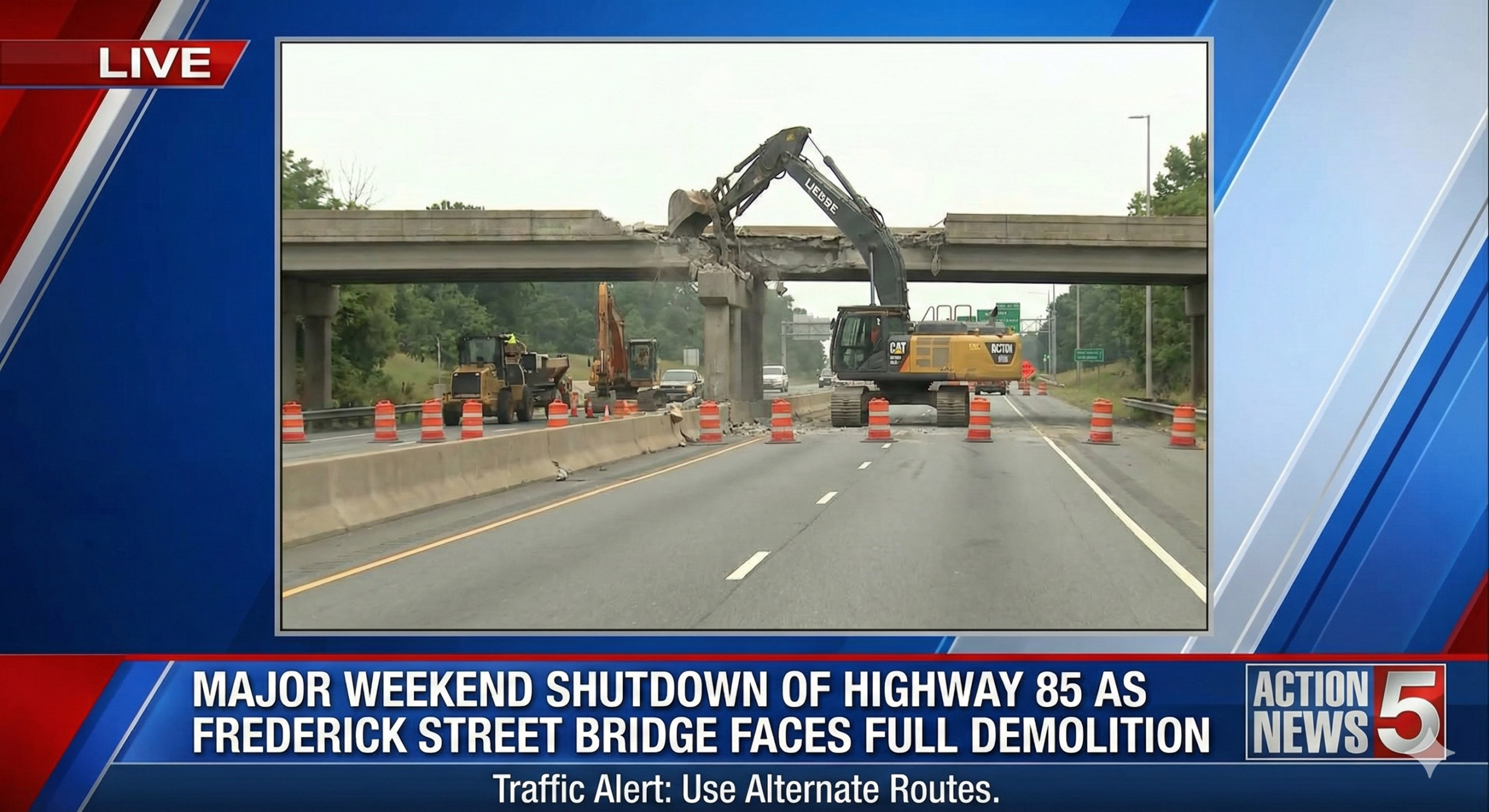
A Significant Traffic Disruption With Long-Term Payoff
Drivers who count on Highway 85 to ferry them smoothly through Kitchener might want to brace themselves. This weekend marks a major turning point in one of the region’s largest ongoing infrastructure projects, and it arrives with a full closure of the highway in both directions. The Ministry of Transportation (MTO) has confirmed that the Frederick Street Bridge, a long-serving structure now at the end of its lifecycle, is scheduled for demolition—an undertaking that will effectively halt traffic flow for nearly 20 hours.
As with most large-scale construction events, the public is being urged to plan ahead, remain patient, and perhaps embrace the detour-rich adventure to come. One commuter joked earlier this week, “I guess I’ll get to discover neighborhoods I never knew existed,” a comment that mirrors a sentiment many drivers share when their routines suddenly shift. Comedian George Carlin once quipped that a highway is “a place you go to get frustrated just slightly faster.” This weekend, that frustration might run on foot.
Still, the work underway promises long-term benefits for regional transportation links, and officials are emphasizing that short-term inconvenience will pave the way—quite literally—for improved safety and flow once the bridge replacement is complete.
A Weekend Closure With Widespread Impact
What Drivers Need to Know
Beginning Saturday, Dec. 6 at 10 p.m., Highway 85 will shut down completely in both directions. The closure will continue until Sunday, Dec. 7 at 6 p.m., creating a sizeable window in which no traffic will be permitted along the affected corridor.
Northbound drivers will find the highway sealed off at Ottawa Street, while the southbound closure point will begin at Wellington Street. Motorists will also be unable to enter Highway 85 from Ottawa Street, Wellington Street, Edna Street, or Bruce Street for the duration of the demolition. Detours will be in place, but officials warn that delays should be expected—even for those who believe they’ve mastered the art of bypassing construction zones.
A Fictional Glimpse at a Realistic Experience
Earlier this fall, local resident Marlene Peterson found herself caught in a smaller, temporary lane reduction tied to this same project. She described the moment with a laugh: “I left home with a coffee and a podcast. I finished both, and I still hadn’t reached my exit.” She wasn’t annoyed, she said—just amused at how construction projects manage to reveal our optimistic underestimation of travel time. “It’s like the universe politely reminding us we’re not really in control.”
Her story is relatable, and this weekend’s shutdown may produce many similar tales—though ideally without the extended travel times.
The Bigger Picture: A Bridge Replacement Years in the Making
Why the Demolition Is Necessary
The Frederick Street Bridge removal marks a milestone in a larger, multi-year infrastructure overhaul. The aging bridge is being replaced as part of an extended effort to modernize critical components of the Highway 7 corridor. According to MTO projections, the full bridge replacement will not be complete until June 2027.
Frederick Street itself has already been closed between Ann Street and Edna Street since Monday, Dec. 1. That segment isn’t expected to reopen until November 2026. For residents and local businesses, the landscape of daily travel has already shifted significantly—and it will remain that way for quite some time.
Impacts Beyond the Highway
Lane reductions have already been in effect along Highway 85, prompting drivers to adapt to narrowed corridors and fluctuating speed limits. While this weekend represents the most dramatic disruption to date, it is just one step in a broader timeline of improvements.
For many community members, frustration is balanced by optimism. Infrastructure renewal is rarely elegant, never quiet, and almost always slower than anyone hopes. And yet, the end result—a safer, more efficient transportation network—is a return on investment that most drivers eventually appreciate. After all, as author Douglas Adams once wrote, “I love deadlines. I like the whooshing sound they make as they fly by.” Construction deadlines, however, seldom whoosh quietly.
A Closer Look at the Timeline
Key Dates and Milestones
-
Dec. 6, 2025 – 10 p.m.: Full closure of Highway 85 begins.
-
Dec. 7, 2025 – 6 p.m.: Highway expected to reopen, barring weather-related delays.
-
Dec. 1, 2025: Frederick Street officially closed from Ann Street to Edna Street.
-
November 2026: Projected reopening of Frederick Street.
-
June 2027: Anticipated completion of the full Frederick Street Bridge replacement.
Each of these dates underscores the scale of the undertaking. A bridge demolition might look like a single dramatic event, but the planning, staging, and safety coordination behind it involve months of precision work. Engineers, inspectors, contractors, and municipal partners all operate as a coordinated machine—though one moving at the cautious pace required when working over an active highway.
Weather: The Unpredictable Variable
As with any construction operation of this scale, Mother Nature remains an uninvited consultant whose influence cannot be ignored. The MTO has issued a reminder that all dates are subject to change if weather conditions become unsafe for demolition crews. Snow accumulation, freezing rain, or high winds can force delays.
Anyone who has ever attempted to shovel a driveway in freezing temperatures understands the problem. Multiply that by thousands of tons of concrete and steel, and the stakes become clear.
Regional Preparedness and Driver Guidance
What Authorities Recommend
Traffic authorities advise motorists to plan alternative routes well ahead of the weekend closure. Navigation apps can help, but many drivers know too well that digital directions sometimes lead them straight into congestion. Officials also encourage leaving early, carpooling when possible, and checking for real-time updates before heading out.
Commuters who typically rely on Highway 85 for essential travel may want to reconsider timing or mode of transportation. For some, the closure presents an unexpected opportunity to explore public transit options—an idea that often elicits mixed reactions. One driver joked, “I tried the bus once. It was fine, but I kept reaching for a steering wheel that wasn’t there.”
Local Businesses: Adapting to the Slowdown
Nearby businesses have taken the news in stride. Some are preparing for reduced customer traffic, while others are offering promotions to encourage locals to stay within the neighborhood during peak closure hours. Construction often reshapes economic patterns temporarily, but many business owners report they’re used to adapting.
One café owner noted, “Honestly, if people are stuck avoiding the highway, maybe they’ll use the detour that runs right past my front door. I’ll take what I can get.”
Looking Ahead: The Long-Term Vision
What This Project Ultimately Enables
Once completed, the Frederick Street Bridge replacement will support the broader modernization of the Highway 7 transportation corridor. Improved safety, strengthened structural integrity, and smoother traffic movement all rank among the expected benefits. The project also sets the stage for future regional transit improvements, creating a framework that will influence transportation planning for decades.
It’s the kind of long-term investment communities often debate vigorously—but ultimately rely upon. Infrastructure may not inspire glamour, but it is the backbone of daily life. And when that backbone is reinforced, everything from commuting to commerce becomes more efficient.
Conclusion: A Challenging Weekend With Promising Outcomes
This weekend’s shutdown of Highway 85 is more than a temporary inconvenience. It marks a pivotal moment in a major infrastructure overhaul that will shape travel patterns in Kitchener for years to come.
The demolition of the Frederick Street Bridge underscores both the complexity and necessity of modernizing aging transportation networks. While the closure may test drivers’ patience, the long-term gains—a safer bridge, improved roadway performance, and enhanced regional flow—represent a meaningful return.
So, as motorists adjust their routines and navigate less-traveled streets, perhaps the moment offers a chance to embrace perspective. Progress, after all, often arrives with detours. And sometimes, those detours lead us somewhere unexpectedly worthwhile.
Leave a Reply